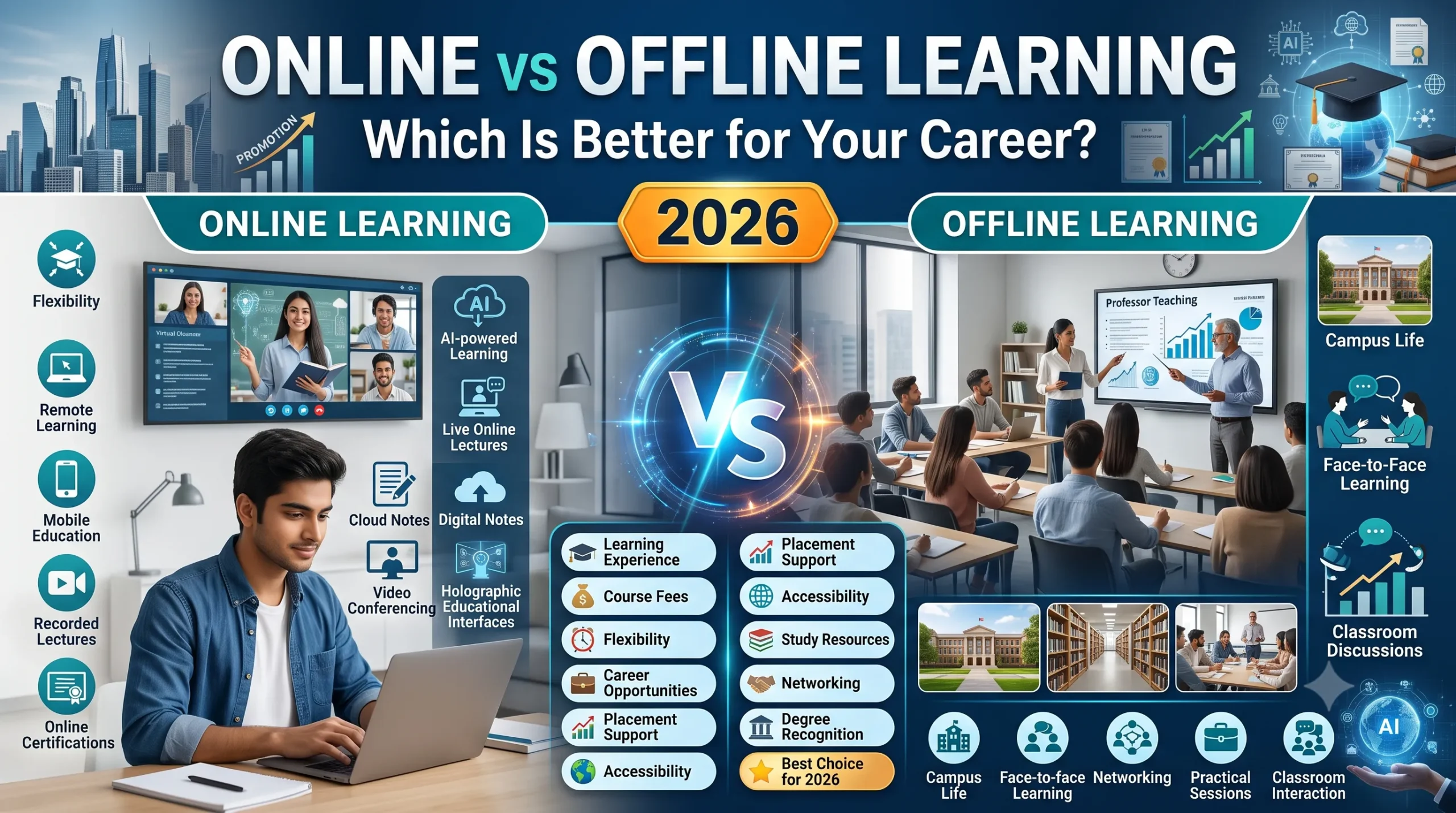
Choosing the right learning method has become one of the most important decisions for students and working professionals. With the rapid growth of technology, education is no longer limited to classrooms. Today, learners can pursue online graduation courses in India, professional certifications, and even complete online undergraduate degrees from the comfort of their homes. At the same time, traditional classroom education continues to offer structured learning and face-to-face interaction.
So, which learning model is right for you? The answer depends on your career goals, learning preferences, schedule, and budget. While both online and offline education have their strengths, understanding their differences can help you make an informed decision. This guide explains everything you need to know about both learning methods, their advantages, challenges, and who benefits the most. Whether you are a student planning your future or a professional looking to upgrade your skills, this guide will help you choose the learning path that aligns with your goals.
What Are Online and Offline Learning Models?
Before comparing both approaches, it is important to understand what they actually mean.
Online learning allows students to attend classes, submit assignments, and interact with faculty through digital platforms. It includes everything from online college courses and certification programs to complete online bachelor degrees in India offered by UGC-recognized universities. Students can study from any location with internet access while managing work, internships, or personal responsibilities.
Offline learning follows the traditional classroom model where students attend lectures on campus according to a fixed schedule. Face-to-face discussions, practical sessions, classroom activities, and direct interaction with teachers are central to this learning experience.
Although both methods aim to deliver quality education, they differ significantly in flexibility, accessibility, costs, and overall learning experience.
Online vs Offline Learning: A Quick Comparison
| Feature | Online Learning | Offline Learning |
| Flexibility | Learn anytime and anywhere | Fixed class schedules |
| Cost | Lower overall expenses | Higher tuition and commuting costs |
| Accessibility | Available across India | Limited by location |
| Networking | Virtual discussions and communities | Face-to-face networking |
| Learning Style | Self-paced and independent | Structured classroom learning |
| Best For | Working professionals, remote learners | Students seeking campus experience |
This comparison highlights why more students are now exploring online graduation courses as an alternative to conventional education.
Advantages of Online Learning
The popularity of online graduation courses in India continues to grow because they offer flexibility that traditional education cannot always provide. Students can learn according to their own schedule without sacrificing work or family commitments.
Some major benefits include:
- Study from any city without relocating.
- Lower tuition and fewer additional expenses.
- Access recorded lectures anytime.
- Learn at your own pace.
- Continue education while working full-time.
- Gain industry-relevant digital skills.
- Choose from numerous online college courses across different specializations.
Many universities now integrate AI-powered learning systems, interactive assessments, virtual classrooms, and career-focused projects that make online education more engaging than ever before.
Another advantage is accessibility. Students from smaller towns can now enroll in top universities offering online bachelor degrees in India, something that previously required relocation and significant financial investment.
Challenges of Online Learning
While online education offers remarkable flexibility, it also requires responsibility and discipline.
Some common challenges include:
- Maintaining motivation without classroom supervision.
- Managing study schedules independently.
- Internet connectivity issues.
- Limited hands-on practical exposure in certain fields.
- Reduced spontaneous interaction with classmates.
However, these challenges are becoming easier to overcome as universities introduce live mentoring sessions, discussion forums, career counseling, and collaborative projects.
Choosing recognized institutions that provide continuous academic support makes online learning much more effective.
Advantages of Offline Learning
Traditional classroom education remains valuable for students who prefer direct interaction and structured environments.
Offline education offers:
- Immediate feedback from instructors.
- Face-to-face classroom discussions.
- Better practical exposure for laboratory-based programs.
- Campus activities and networking opportunities.
- Fixed schedules that improve consistency.
Many learners perform better in classrooms because the structured routine helps maintain focus and accountability.
Additionally, campus experiences often help students develop communication, teamwork, leadership, and interpersonal skills that contribute to long-term career growth.
Limitations of Offline Learning
Despite its strengths, offline education may not suit everyone.
Some limitations include:
- Daily commuting consumes valuable time.
- Higher expenses for travel, accommodation, and campus facilities.
- Limited flexibility for working professionals.
- Course availability depends on geographic location.
- Students must follow the pace of the entire class.
For individuals balancing careers, businesses, or family responsibilities, these limitations often make online undergraduate degrees a more practical choice.
Which Learning Method Is Right for You?
The best learning model depends entirely on your personal and professional goals.
Working Professionals
Online learning is often the better option because it allows professionals to continue earning while studying. Flexible schedules, recorded lectures, and weekend classes make online graduation courses ideal for career advancement.
Students and Fresh Graduates
If you enjoy classroom interaction and campus life, offline education may suit you well. However, students looking for affordability and flexibility should also consider online graduation courses in India, especially when offered by recognized universities.
Career Changers
Professionals planning to enter new industries often benefit from online college courses because they provide faster skill development with minimal disruption to existing careers.
How Skill2Work Makes Online Education Easier
Selecting the right university is often more challenging than choosing between online and offline education. With hundreds of universities offering different programs, students frequently struggle to identify genuine, career-oriented options.
This is where Skill2Work helps learners make informed decisions.
Skill2Work is an online education consultancy that assists students in selecting UGC-recognized universities offering trusted online graduation courses in India, postgraduate programs, diploma courses, and other online undergraduate degrees. Rather than promoting random institutions, Skill2Work understands each learner’s academic background, career aspirations, and learning preferences before recommending suitable programs.
Its expert guidance simplifies admissions, documentation, university selection, enrollment, and career planning while ensuring complete transparency throughout the process.
Whether you are looking for flexible online bachelor degrees in India or industry-focused online college courses, Skill2Work helps you confidently begin your educational journey.
How to Choose the Right Learning Model
Before enrolling in any program, ask yourself these questions:
- What are my long-term career goals?
- Can I attend regular classroom sessions?
- Do I need flexibility because of work or family commitments?
- Is the university UGC-recognized?
- Does the course provide career support and industry relevance?
- Will the program help me develop practical skills?
Answering these questions will help you select a learning path that supports both your academic growth and future career success.
Build Your Future with Skill2Work – Learn Smarter, Grow Faster
Finding the right educational path should never feel overwhelming. Whether you want to pursue online graduation courses in India, explore trusted online college courses, or enroll in recognized online bachelor degrees in India, choosing the right guidance makes all the difference.
Skill2Work is committed to making online and distance education simple, transparent, and career-focused. By connecting learners with trusted universities and offering expert admission guidance, Skill2Work helps students confidently take the next step toward academic and professional success.
Learn Online. Upgrade Your Skills. Build Your Future. Step In Today!
With Skill2Work by your side, you don’t just enroll in a course, you invest in a future filled with better opportunities, stronger career prospects, and lifelong learning. Whether you’re beginning your first degree or planning your next career move, Skill2Work empowers you to make the right choice with confidence.
Frequently Asked Questions (FAQs)
1. Are online graduation courses in India valid?
Yes. If offered by UGC-recognized universities, online graduation courses in India are valid and widely accepted for employment and higher education.
2. Are online bachelor degrees in India accepted by employers?
Yes. Degrees from recognized universities are increasingly accepted by employers, especially when combined with practical skills and relevant experience.
3. Who should choose online undergraduate degrees?
Working professionals, remote learners, parents, entrepreneurs, and students seeking flexible education often benefit the most from online undergraduate degrees.
4. Are online college courses more affordable than offline education?
Generally, yes. Students save on transportation, accommodation, campus fees, and other associated expenses.
5. Can I pursue online graduation courses while working?
Absolutely. One of the biggest advantages of online graduation courses is the ability to balance education with full-time employment.