
By working closely with accredited e-learning partners, we make sure every program we offer meets high academic standards and stays relevant to industry needs. This means learners get recognized online course certifications that aren’t just certificates on paper but real credentials that add value to their resumes and help them grow in their careers.


The University Grants Commission is a statutory organization under the Ministry of Education, Government of India, established by an Act of Parliament in 1956 for the promotion and co-ordination of university education and for the determination and maintenance of standards of teaching, examination and research in universities, and for the purpose of performing its functions under this Act. In addition to providing grants to eligible universities and colleges, the Commission also advises the Central and State Governments on the measures which are necessary for the development of Higher Education.

The primary objective of the UGC is to ensure the maintenance of standards and the enhancement of quality in higher educational institutions throughout India. The UGC holds a pivotal role in shaping India’s higher education landscape. Its efforts are geared toward elevating the quality of education, fostering research, and promoting equitable access to higher education opportunities across the nation. Throughout the years, it has been actively engaged in various initiatives and reforms aimed at enhancing the overall educational framework in India.
UGS’s initiatives for the Internationalisation of Higher Education: University Grants Commission (UGC) has initiated several measures for the internationalisation of the Higher Education system in India, persuade to the recommendations of the National Education Policy 2020. The University Grants Commission notified the Guidelines on Internationalisation of Higher Education, which included provisions like setting up an office for International Affairs and Alumni Connect Cell in the universities; University Grants Commission (Academic Collaboration between Indian and Foreign Higher Educational Institutions to offer Twinning, Joint Degree and Dual Degree Programmes) Regulations have been notified to foster academic collaboration between India Higher Educational Institutions and Foreign Higher Educational Institutions.
| S No. | Title | Year | Published | View Details |
|---|---|---|---|---|
| 1 | Guidelines on Sustainable and Vibrant University-Industry Linkage System for Indian Universities | 2024 | 10/01/2024 | View PDF |
| 2 | Guidelines to Provide Equitable Opportunity for the Socio-Economically Disadvantaged Group (SEDGs) in the HEIs | 2024 | 31/01/2024 | View PDF |
| 3 | UGC Guidelines for Internship/Research Internship for Undergraduate Students | 2024 | 02/02/2024 | View PDF |
| 4 | Guidelines for Institutional Development Plans for Higher Education Institutions | 2024 | 06/02/2024 | View PDF |
For latest guidelines follow https://www.ugc.gov.in/Guideline

Distance Education Bureau (DEB): Distance Education Bureau is a body under the University Grants Commission (UGC) and it has been established to maintain the standards of open and distance education in India. DEB was established in the year 2012 and replaced the Distance Education Council (DEC). Every university needs the approval of DEB to provide online and distance education to students. Universities that have gained recognition from UGC-DEB are allowed to provide courses from the distance learning mode, otherwise, distance degrees from universities will not have any value. In the last six decades the ODL system has registered a phenomenal growth in the context of expansion and diversification of higher education. From a single institution in 1962 (Delhi University) the number of ODL institutions has reached approximately 250 including Central, State, deemed to be and Private Universities along with many stand-alone institutions.
Objectives Of Distance Education Bureau (DEB)
Functions Of Distance Education Bureau (DEB)
Role Of Distance Education Bureau (DEB)
The Department of Higher Education established the Distance Education Bureau for regulating the processes and activities carried out in distance education programs for higher education in the country. It is important to make sure that the colleges are working as per the standards established by the Distance Education Bureau.
The Distance Education Bureau is an entity that ensures that all the universities offering distance education comply with the standards and rules to maintain the high quality of education in all the courses and programs.
It aims to provide high-quality education for the students which will enrich them with good knowledge and incorporate key skills.
The Bureau takes care of all the activities and tasks related to distance education which includes course material formats, admission processes, document requirements, giving affiliation to the colleges, and conducting exams.
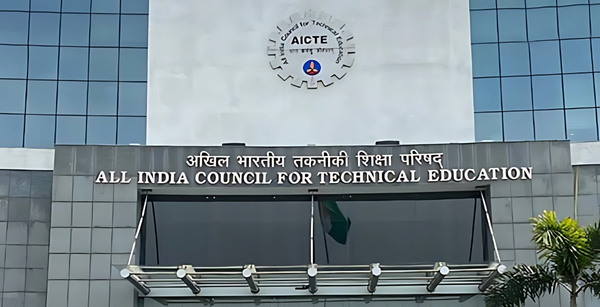
All India Council for Technical Education (Aicte): AICTE is a national-level council for technical education in India and it has been established under the department of higher education. This body has been established as an advisory council for the proper management and development of technical education and management education in India.
All India Council for Technical Education (AICTE) was set up in November 1945 as a national-level Apex Advisory Body to conduct a survey on the facilities available for technical education and to promote development in the country in a coordinated and integrated manner.
In the beginning, it was established as an advisory body but later it gained the status of a statutory body under an act of parliament. This council is responsible to provide guidance and recommendations to colleges affiliated with universities.
The government of India has established certain statutory bodies to regulate and maintain higher education in India so that the standard can be maintained. There are different councils under these bodies, for instance, the distance education council. Statutory bodies like UGC and AICTE have the authority to regulate all the higher education institutes.
Objectives of AICTE
Vision of AICTE
To be a world-class organization leading technological and socio-economic development of the country by enhancing the global competitiveness of technical manpower and by ensuring high quality technical education to all sections of the society.
NOTE:- Universities do not require AICTE approval but technical institutes affiliated with universities require AICTE approval. Also, if your college is UGC-approved but not AICTE-approved, still you won’t suffer any of the consequences as universities do not necessarily require AICTE approval but it is an add-on to their recognition.

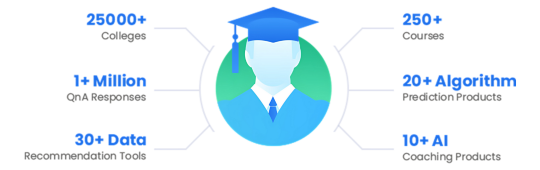
Career 360 A data-enabled and technology-driven Educational Products and Services Company, Careers360 seamlessly integrates millions of students and institutional data points with the user-generated preferences of its more than 15 million+ monthly visitors, to build sophisticated Prediction and Recommendation products for the students to explore and achieve career plans, based on their interests and abilities.
Who Is Career 360?
Driven by a 240+ members young team, they cover 25,000+ colleges, 250+ courses and have 250+ products, from exam preparation to college recommendation, used by over 225 Million students every year.

National Institutional Ranking Framework (NIRF) is a ranking methodology adopted by the Ministry of Education, Government of India, to rank institutions of higher education every year in India. The framework was approved by the former Ministry of Human Resource Development (now the Ministry of Education) and launched by the Minister on 29 September 2015.
Depending on their areas of operation, institutions have been ranked under 11 different categories – overall, university, colleges, engineering, management, pharmacy, law, medical, architecture, dental and research. The Framework uses several parameters for ranking purposes like resources, research, and stakeholder perception. These parameters have been grouped into five clusters and these clusters were assigned certain weights. These weights depend on the type of institution. About 3500 institutions voluntarily participated in the first round of rankings
To check the NIRF ranking of your dream college you can visit https://www.nirfindia.org/2023/Ranking.html
Certain FAQs about the NIRF
1) Accreditation VS Ranking
2) Since there is already accreditation, should there be ranking too?
3) Can an institution which had a bad accreditation grade get a good rank and vice versa?
4) Is the score shown against each institution reflective of their performance?
5) How good is the data on which ranking has been done?
National Assessment and Accreditation Council (NAAC) checks and rates colleges, universities, and similar institutions to figure out how good they are in terms of quality. NAAC looks at things like how well they teach, the subjects they cover, the teachers, research, facilities, and overall management. It’s like giving them a grade to show how well they’re doing in different areas.
|
VISION
To ensure that higher education in India stands out for its excellence, the goal is to emphasize quality as the most crucial factor. This involves a mix of internal and external evaluations, along with efforts to encourage and maintain high standards.
|
MISSION
The objectives are as follows:
|
To promote the following core values among the HEIs of the country:

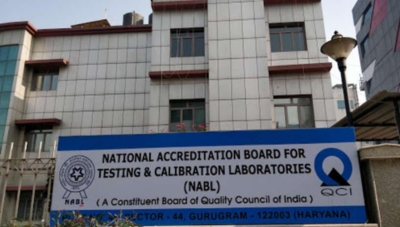
National Board of Accreditation purpose is to promote and recognize excellence in technical education in colleges and universities – at both the undergraduate and post graduate levels. Institutions, students, employers, and the public at large all benefit from the external verification of quality provided through the NBA accreditation process. They also benefit from the process of continuous quality improvement that is encouraged by the NBA’s developmental approach to promote excellence in technical education. Through accreditation, the following main purposes are served:
Impact of accreditation
The purpose and impact of accreditation goes far beyond quality assurance of an Institution and its programs. Major impacts of accreditation system are summarized below:

Association of Chartered Certified Accountants a globally recognised professional accountancy body providing qualifications and advancing standards in accountancy worldwide. Founded in 1904 to widen access to the accountancy profession, they’ve long championed inclusion and today proudly support a diverse community of over 247,000 members and 526,000 future members in 181 countries.
There forward-looking qualifications, continuous learning and insights are respected and valued by employers in every sector. They equip individuals with the business and finance expertise and ethical judgment to create, protect, and report the sustainable value delivered by organisations and economies.
Guided by their purpose and values, there vision is to develop the accountancy profession the world needs. Partnering with policymakers, standard setters, the donor community, educators and other accountancy bodies, they are strengthening and building a profession that drives a sustainable future for all.
Accreditation of your programmes ensures that students registering with ACCA will receive a level of exemption which matches the knowledge and skills gained from their previous qualifications. Students will benefit from knowing which module choices will lead to maximum exemption from the ACCA examinations and will be assured of receiving the appropriate level of exemption immediately upon registration with ACCA.
ACCA’s accreditation handbook is primarily intended as a source of information for course leaders of educational programmes for which accreditation is already held or is being sought. It provides useful information for other parties, such as departmental heads, student advisers, and anyone with an interest in ACCA exemption accreditation and guidelines.

World Education Services WES is an association that compares the education credentials of a person from the home country to that of the country he/she is willing to migrate to. This comparison is done to equate the educational standards of both countries. It’s an association founded in 1974 and is based in New York. WES helps in evaluating the educational credentials of a person who wants to apply for admission or job position in a foreign country. The main purpose of the WES evaluation is to equate the educational credentials of two different countries and to help authorities or institutions to qualify the person from an outside country applying for the job or admission.

Association of Commonwealth Universities (ACU) established in 1913 is a charitable organization boasting a membership of over 500 institutions in more than 50 countries within the Commonwealth. As the world’s oldest international network of universities, the ACU is dedicated to advancing excellence in higher education for the benefit of individuals and societies across the Commonwealth and beyond. With a collective population of 3 billion, primarily under the age of 30, in Commonwealth nations, the organization pursues its mission through various projects, networks, and events, drawing on the wealth of experience and expertise within its membership.
The ACU actively engages in addressing international higher education issues by administering scholarships, offering academic research, and providing leadership on sector-related matters. Additionally, it promotes collaboration among universities, facilitating the exchange of best practices and encouraging inter-university cooperation to better serve their respective communities.
Governed by its member institutions, the ACU operates under the oversight of an elected Council, with members also serving as Trustees due to its status as a UK-registered charity. The ACU Council, comprising up to 23 members, includes 20 elected Council members, up to two co-opted Council members, and the Honorary Treasurer, who may be either elected or co-opted.

International Qualifications Assessment Service (IQAS) is an Alberta government service. It completes assessments and issues certificates that compare educational credentials from other countries to educational standards in Canada.
In Canada, some occupations are regulated and have legal requirements. To work in these occupations, you must register with the appropriate professional regulatory organization. It helps people get recognition for education and training they received outside of Canada. IQAS issues certificates that compare educational credentials from other countries to educational standards in Canada.
Why get an assessment
You can use an IQAS assessment to support your:

QS World University Rankings , The QS World University Rankings is one of the most widely recognized and respected ranking systems for universities. Each year, QS ranks over 1,000 universities from around the world based on a range of criteria, including academic reputation, employer reputation, research impact, and citations per faculty member. While no ranking system is perfect, there are a number of benefits to the QS World University Rankings for universities.

Times Higher Education’s is one of the three main ranking systems available today which provide a detailed yearly analysis of how well the top universities in the world performed mission is to be the definitive source of data, insight and expertise on higher education worldwide. Their business is to build on 10 million datapoints from 2,500 institutions in 93 countries; on unrivalled news, insight and intelligence; and on a relationship of trust with universities spanning 50 years. This unique combination enables us to help institutions and their leadership teams, as well as millions of students every year, to make the informed decisions that will define their futures. Times Higher Education (THE) publishes a top of the best universities in the world every year. It evaluates world universities based on 5 key metrics

International Outlook Universities are no longer compared just with rivals in their own city, or even their own country; world-leading universities are competing globally and attracting students and researchers from across the world. International outlook is therefore a mark of a top institution, relevant both to international and domestic students. It is measured by three indicators: proportion of international students, proportion of international staff and international collaboration. The benefits of an international environment on campus range from cultivating open-minded discussions with diverse opinions to improving cross-cultural relations. But at a more basic level, an isolated institution without international connections simply cannot count itself among the world’s best universities in an increasingly global and mobile world.