
Generic selectors
Exact matches only
Search in title
Search in content
Post Type Selectors
Generic selectors
Exact matches only
Search in title
Search in content
Post Type Selectors

Online Dual MCA in Financial Technology
(FinTech) and Artificial Intelligence (AI)

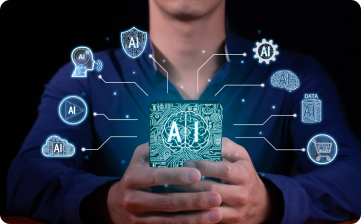
An Online Dual MCA in Financial Technology (FinTech) and Artificial Intelligence (AI) is a postgraduate computer applications program designed for graduates who want to specialize in financial systems, digital banking technologies, data analytics, and AI-driven financial solutions. The program combines core computing knowledge with advanced concepts in financial modeling, machine learning, blockchain fundamentals, algorithmic trading, risk analytics, and intelligent automation.

Why Choose an Online Dual MCA in Financial Technology (FinTech) and Artificial Intelligence (AI)?

Choosing an Online Dual MCA in Financial Technology (FinTech) and Artificial Intelligence (AI) is a strategic step for learners aiming to enter the rapidly evolving fintech and AI ecosystem. Financial institutions today rely heavily on data-driven insights, AI-powered fraud detection, predictive analytics, and automated investment systems. This program equips students with both technical and financial domain expertise.

The online format allows working professionals and graduates to pursue advanced education without interrupting their careers. Through structured digital learning, live sessions, recorded lectures, and applied projects, learners develop practical exposure to financial software systems, AI algorithms, and intelligent financial applications. The Online Dual MCA in Financial Technology (FinTech) and Artificial Intelligence (AI) supports career growth in sectors such as digital banking, fintech startups, investment firms, insurance technology, and financial analytics companies.

Industry-Relevant Curriculum

Aligned with modern fintech innovations, AI integration, digital payments, and financial analytics technologies.

AI & Data-Driven Learning

Focuses on machine learning, predictive modeling, and intelligent financial systems development.

Career-Oriented Approach

Prepares students for fintech, AI, and data-focused roles in banking and financial services.

Flexible Online Learning

Enables professionals to balance academic advancement with job responsibilities.

Strong Technical Foundation

Builds expertise in programming, databases, data structures, and financial computing systems.

Real-World Applications

Includes case studies, capstone projects, and fintech simulation-based assignments.

Expanding Industry Demand

Fintech and AI skills are increasingly valuable across global financial markets.

Recognized University Credential

Provides a postgraduate qualification with strong academic and industry credibility.

Eligibility & Duration

Online Dual MCA in Financial Technology (FinTech) and Artificial Intelligence (AI) Eligibility
Applicants must have completed a Bachelor of Computer Applications (BCA), a Bachelor’s degree in Computer Science or Engineering, or a Bachelor’s degree in Science, Commerce, or Arts with Mathematics at the 10+2 level. Candidates who have not studied Mathematics at the 10+2 or graduation level may also apply after successfully qualifying a prescribed Bridge Course, as per university guidelines.
Online Dual MCA in Financial Technology (FinTech) and Artificial Intelligence (AI) Duration
The Online Dual MCA in Financial Technology (FinTech) and Artificial Intelligence (AI) typically spans 2 years and is divided into four semesters. This structure enables students to progressively build expertise in AI technologies, financial systems, data science, and intelligent automation while managing professional commitments.

Most Common Career Opportunities After Completion

MCA Specialisations

General MCA Management

Provides a strong foundation in computer applications, programming, and core IT concepts.

Artificial Intelligence & Machine Learning Management

Focuses on intelligent systems, predictive models, and automated decision-making techniques.

AI & Data Science Management

Integrates artificial intelligence with data analysis to build insight-driven solutions.

Augmented Reality & Virtual Reality (Game Development) Management

Emphasizes immersive technologies for interactive applications and game environments.

Fee Structure for Online Dual MCA in Financial Technology (FinTech) and Artificial Intelligence (AI)

Program Fee: Starting at ₹ 68,600 – ₹ 68,800/- per semester 

Low Cost EMI Available

The online Dual MCA in Financial Technology and AI fees may differ across universities depending on institutional policies and academic structure. Typically, the program follows a semester-wise payment format, allowing students to manage expenses conveniently while planning their finances in an organized and flexible manner.

Flexible Fee Payment Options Available for Students:

List of Universities & Fee Structure

UniversityFee Structure
Amity University
  • 1–3 Semester: ₹ 68,800/- Per Semester
  • 4th Semester: ₹ 68,600/- Per Semester

How Skill2Work Assists You

Expert Counseling

Course Comparison

Admission Support

Eligibility Guidance

Ongoing Assistance

The Right Path Begins with The Right Guidance

Connect with Skill2Work mentors who help you make confident learning decisions.

Our Testimonials

Quick Tips & Insights

Career Guidance for Students
Aiming Government Jobs
Build Job-Ready Skills & Get
Hired Faster
Smart Planning for Government Jobs
Career Advice

Need Assistance? Get In Touch

University Form

Frequently Asked Question

IS AN ONLINE MCA DEGREE VALID?

Yes, Degrees obtained through Online or Distance mode are valid, provided approval is given by the UGC-DEB to the university to offer the said programme. Details of the Universities/ Deemed to be Universities empowered to offer courses under Online/distance mode are available at the UGC website https://deb.ugc.ac.in/.

For more information, call us!

Yes, according to the UGC notification dated 02-09-2023, degrees earned through Online or Distance learning modes are treated as equivalent to those obtained through regular classroom programs. The official notification can be accessed here: https://deb.ugc.ac.in/Uploads/Notices_Upload/UGC_20220906101709_1.pdf. Therefore, an MCA completed through Online or Distance mode holds the same recognition and academic value as a traditional MCA degree.

  • University Grants Commission (UGC) Approval: Indian universities, whether traditional or open, need to obtain approval from the UGC to offer online courses. The UGC had issued specific regulations for open and distance learning, which also apply to online education. These regulations specified the norms and standards that institutions had to adhere to while offering online programs.
  • Compliance with Distance Education Regulations: In addition to UGC regulations, universities offering online programs also had to comply with the Distance Education Bureau (DEB) regulations, which governed open and distance learning programs.
  • Approval from AICTE: The AICTE primarily focuses on technical education, including engineering, management, pharmacy, or applied sciences, and Indian Universities specifically do not require AICTE approval to start online courses. Its role is to regulate and promote technical education in India. These regulations are mainly applied to traditional universities and institutions that offer online or distance education programs.
  • Quality Assurance: Indian universities are required to maintain the quality and standards of education in online programs. This often involves regular assessment and accreditation by bodies like the National Board of Accreditation (NBA) or the National Assessment and Accreditation Council (NAAC).
  • Rankings: The National Institutional Ranking Framework (NIRF) is a ranking system for higher education institutions in India. It was launched by the Ministry of Education in 2015 to assess and rank Indian universities and colleges based on various parameters. NIRF rankings aim to provide prospective students and other stakeholders with valuable information about the quality and performance of educational institutions.

Yes, many universities offering the Online Dual MCA in Financial Technology (FinTech) and Artificial Intelligence (AI) provide live interactive lectures along with recorded sessions. The exact format depends on the institution, but most programs combine real-time classes, discussion forums, and self-paced learning materials.

The Online Dual MCA in Financial Technology and AI fees vary by university. Most institutions follow a semester-wise fee structure, making payments manageable for students. Flexible options such as annual payments or EMI facilities may also be available, depending on the university’s policies.

After completing the Online Dual MCA in Financial Technology (FinTech) and Artificial Intelligence (AI), graduates can pursue roles in fintech companies, banks, AI-driven startups, and financial analytics firms, including positions such as financial data analyst, AI engineer, fintech developer, or risk analytics specialist.

Work experience is generally not mandatory for admission. Fresh graduates who meet the eligibility criteria can apply directly. However, professionals working in IT, banking, finance, or analytics may find the program especially beneficial for career advancement and domain specialization.

Yes, most universities include a final-year project or capstone component. This allows students to apply AI techniques and financial technology concepts to real-world problems such as fraud detection, predictive analytics, automated trading systems, or digital payment solutions.

Basic knowledge of programming and mathematics is helpful, particularly in areas like Python, data structures, and statistics. However, the curriculum typically starts with foundational technical modules to ensure students can gradually build advanced competencies in AI and fintech applications.

Yes, graduates may opt for higher academic pathways such as a PhD in Computer Science, Artificial Intelligence, Data Science, or Financial Technology. The dual specialization also strengthens eligibility for advanced certifications in machine learning, blockchain, and quantitative finance.

Need Assistance? Get In Touch

University Form