The Online BBA in Logistics and Supply Chain program develops knowledge of supply operations, inventory management, transportation systems, and global trade processes, preparing students for careers in logistics, operations, and distribution management.

An online BBA in Logistics and Supply Chain is ideal for students who want to understand how goods, services, and resources move efficiently across businesses and global markets. Modern organizations depend heavily on strong supply chains to maintain productivity, reduce costs, and ensure customer satisfaction. This program introduces learners to key concepts such as procurement, inventory control, warehousing, transportation management, and international logistics operations.
The online format provides flexibility, allowing students to pursue education from any location while managing other responsibilities. The curriculum typically combines business management fundamentals with logistics specialization subjects, helping learners understand operational efficiency and decision-making processes. As industries such as e-commerce, manufacturing, retail, and international trade continue to expand, professionals with supply chain knowledge are increasingly in demand. Graduates gain analytical thinking, coordination skills, and operational understanding, creating strong career opportunities in logistics companies, corporate supply departments, and distribution networks.
Develops understanding of logistics operations, transportation systems, and supply chain management across industries and markets.
Builds the ability to coordinate resources, processes, and workflows efficiently within organizational environments.
Introduces international logistics, import-export processes, and global supply chain frameworks for business operations.
Learn techniques to manage stock levels, warehousing, and distribution systems effectively.
Enhances problem-solving and decision-making skills required for operational efficiency and business growth.

Prepares students for entry-level roles in logistics, operations, procurement, and supply chain departments.
Allows students to study remotely while balancing personal commitments and academic responsibilities comfortably.
Provides a base for MBA in Logistics, Supply Chain Management, or related postgraduate programs.

Manages transportation schedules, shipment tracking, and coordination of supply chain activities efficiently.

Supports procurement, inventory planning, and operational processes across organizational supply networks.

Oversees storage, inventory movement, and warehouse operations to maintain efficiency and accuracy.

Handles daily business operations, process management, and workflow coordination within organizations.

Manages purchasing processes, vendor relationships, and supply requirements for organizational needs.

Coordinates product distribution channels, delivery schedules, and logistics network performance.

Monitors stock levels, demand forecasting, and inventory planning for business efficiency.

Manages logistics-related ventures, supply businesses, or distribution services independently.

Handles freight operations, shipment planning, and transportation logistics coordination effectively.

Focuses on banking operations, financial services, insurance principles, and regulatory frameworks.

Introduces data interpretation, analytical tools, and business decision-making based on insights.

Covers data handling, basic analytics techniques, and practical business data applications.

Focuses on online marketing channels, social media strategies, and digital campaign execution.

Focuses on AI applications in financial analysis, risk assessment, forecasting, and automated financial systems.

Helps learners integrate AI technologies into long-term business planning and competitive strategy.

Covers AI-based talent acquisition, workforce analytics, employee engagement, and HR automation.

Focuses on aviation operations, airport planning, airline management, and aviation regulations.

Explores online business models, digital marketplaces, and e-commerce operations.

Develops foundational knowledge in startup planning, business innovation, and venture creation.

Covers family-run business structures, governance, and entrepreneurial growth strategies.

Focuses on event planning, coordination, budgeting, and execution processes.

Introduces financial management, accounting fundamentals, and corporate finance concepts.

Combines accounting principles with financial analysis and reporting practices.

Covers financial technologies, digital payments, and technology-driven financial services.

Provides a broad foundation in management, business operations, and organizational studies.

Focuses on healthcare operations, hospital administration, and service management.

Covers recruitment, employee management, and organizational behaviour fundamentals.

Focuses on workforce planning, talent development, and people management practices.

Introduces information systems, IT operations, and technology-enabled business processes.

Covers global trade, international markets, and cross-border business operations.

Focuses on capital markets, financial instruments, and investment fundamentals.

Covers logistics operations, supply chain planning, and distribution management.

Introduces marketing principles, consumer behaviour, and promotional strategies.

Focuses on retail operations, merchandising, and customer experience management.

Combines retail management concepts with online sales and digital platforms.

Covers store operations, inventory control, and retail process optimization.

Focuses on tourism operations, hospitality services, and travel industry management.

Covers shipping operations, logistics coordination, and supply chain fundamentals.

Focuses on succession planning, governance, and management of family-owned enterprises.

Introduces AI concepts and their applications in business decision-making.

Covers banking systems, financial markets, and basic finance operations.

Focuses on currency markets, forex operations, and international transactions.

Covers process management, operations planning, and efficiency improvement.
Low Cost EMI Available
The online BBA in Logistics and Supply Chain fees are structured to remain affordable while providing industry-relevant business and logistics education. As the program is delivered online, students save on relocation and commuting expenses compared to traditional campus programs.


| University | Fees Structure |
|---|---|
| DY Patil University, Mumbai |
|
| Chandigarh University |
|


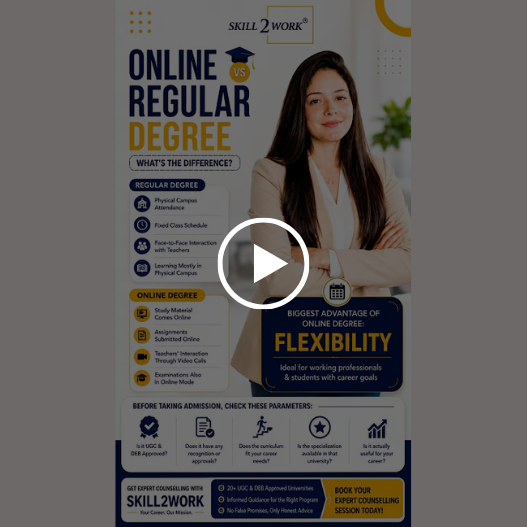
Yes. An Online BBA degree is valid when offered by a university approved to conduct online programs under UGC regulations. Students should always verify institutional recognition before enrolling. A list of approved universities authorized to offer online or distance education is available on the official UGC website: https://deb.ugc.ac.in/
Yes. According to the UGC notification dated 02-09-2022, degrees obtained through online or distance learning are considered equivalent to those earned through regular classroom programs, provided they are awarded by recognized universities. This means the academic value and recognition remain the same. The official notification can be viewed here:
https://deb.ugc.ac.in/Uploads/Notices_Upload/UGC_20220906101709_1.pdf
Before enrolling, students should carefully verify that the university meets required academic and regulatory standards. Important recognitions include:
Checking these approvals helps ensure long-term academic and professional value.
To enroll in an Online BBA in Logistics and Supply Chain program, candidates must have completed 10+2 (or equivalent) from a recognized board. Students from any academic stream are eligible to apply. Eligibility requirements may vary slightly depending on university admission policies.
The Online BBA in Logistics and Supply Chain program typically has a duration of three years, divided into six semesters. The course structure gradually progresses from basic business management subjects to specialized logistics and supply chain topics, allowing learners to develop knowledge and skills over time.
Yes. The program is delivered through online learning platforms that provide access to lectures, study materials, assignments, and assessments digitally. Some universities may include live sessions, recorded lectures, discussion forums, and project work to enhance the learning experience while maintaining flexibility.
Students learn core business concepts along with specialized logistics topics such as supply chain management, procurement, inventory control, transportation systems, warehouse operations, and global trade fundamentals. The program also develops analytical thinking, coordination abilities, and decision-making skills required for operational roles.
Yes. Many universities include assignments, case studies, projects, and industry-oriented learning components in their curricula. These practical elements help students understand real-world logistics operations, improve problem-solving abilities, and develop skills applicable to professional environments.
Students can enroll by selecting a university, submitting an online application form, uploading required documents, and completing the fee payment process. Admission is generally merit-based, and no entrance exam is required for most online BBA programs. Institutions may provide guidance during the admission process.
After completing the degree, graduates can pursue careers in logistics companies, supply chain departments, manufacturing firms, e-commerce businesses, and operations management roles. Students may also choose higher education options such as an MBA in Logistics, Supply Chain Management, or related business specializations for career advancement.