
Online MA Journalism & Mass Communication equips learners with advanced media knowledge, professional communication skills, and industry-oriented expertise, enabling successful careers across journalism, digital media, public relations, and corporate communication domains.

Pursuing an online MA Journalism & Mass Communication equips learners with advanced academic knowledge and real-world media expertise. In today’s fast-evolving information-driven society, organisations demand professionals who can communicate strategically, ethically, and creatively across platforms. This programme strengthens foundational concepts while enabling learners to master digital storytelling, reporting, editing, and media production.
Unlike undergraduate study, a postgraduate journalism course enhances employability, leadership potential, and access to top media organisations. It opens opportunities beyond traditional reporting, including public relations, branding, corporate communication, and digital media. The online MA mass communication format offers flexibility for working professionals and fresh graduates while maintaining academic rigour.
Designed to meet industry requirements, this mass communication course blends theory with practical exposure, helping learners adapt to emerging trends such as OTT platforms, influencer media, and AI-driven content. Graduates gain a competitive edge, enabling them to excel in journalism & mass communication roles across global media landscapes.

Builds strong theoretical foundations aligned with modern journalism & mass communication industry practices.

Unlocks advanced roles beyond entry-level positions in media and communication fields.

Allows learners to pursue MA journalism online without compromising professional or personal commitments.

Combines reporting, editing, digital storytelling, advertising, and public relations training.

Develops confident articulation, refined vocabulary, and effective public communication abilities.

Prepares graduates for competitive salaries across journalism, corporate communication, and media sectors.

Creates persuasive campaigns connecting brands with diverse target audiences effectively.

Manages organisational reputation through strategic media communication and stakeholder engagement.

Oversees internal and external communication strategies within corporate organisations.

Plans, develops, and manages content aligned with audience behaviour and brand goals.
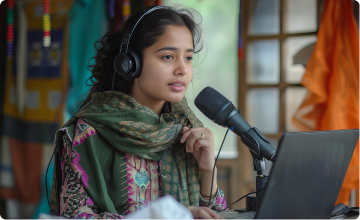
Coordinates news production, scripting, and editorial decisions for broadcast media.

Designs media strategies to maximise campaign reach across multiple platforms.

Manages digital presence, audience engagement, and brand storytelling online.
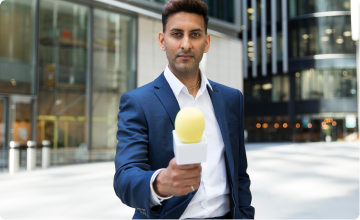
Researches, reports, and presents news across print, digital, and broadcast platforms.

Plans, promotes, and executes media and corporate events strategically.

Emphasizing literature, linguistics, critical theory, and advanced communication skills.

Encompasses historical analysis, cultural studies, and research-based understanding of past societies.

Analyses the structures and behaviour of society by studying perspectives.

Focuses on political theory, governance, public administration, and international relations.

Focuses on AI applications in financial analysis, risk assessment, forecasting, and automated financial systems.

Helps learners integrate AI technologies into long-term business planning and competitive strategy.

Covers AI-based talent acquisition, workforce analytics, employee engagement, and HR automation.

Focuses on aviation operations, airport planning, airline management, and aviation regulations.

Enhances knowledge and understanding of economic theories and policy, and socio-economic developments.

Develops skills in media studies, communication theory

Focuses on policy frameworks, governance, and administrative systems.

Focuses on policy formulation, governance processes, and public administration systems.

Explores human behaviour, mental processes, and psychological theories.

Examines social structures, institutions, and patterns of human interaction.

Studies Jain philosophy alongside comparative religious and philosophical traditions.

Develops understanding of media practices, communication theory, and content creation.
Low Cost EMI Available
The fee structure for the Online MA Journalism & Mass Communication programme is designed to remain affordable and accessible. It reflects the programme’s academic depth, industry relevance, and online delivery model. Learners benefit from cost-effective education without compromising quality, making this journalism & mass communication programme suitable for students and working professionals seeking recognised postgraduate qualifications.

| University | Fee Structure |
|---|---|
| Chandigarh University |
|
| Manipal University |
|
| Amity University |
|


Yes, degrees earned through Online or Distance learning modes are valid, as long as the university or deemed university offering the programme has approval from the UGC–DEB. The official list of universities authorized to offer online or distance education programmes is available on the UGC website at https://deb.ugc.ac.in/.
Yes, an MA degree completed through Online or Distance mode carries the same recognition as a regular MA. As per the UGC notification dated 02-09-2023, degrees awarded via online or distance learning are considered equivalent to those obtained through regular classroom mode. This confirms that an Online or Distance MA is equally valid and accepted.
The link for the same is https://deb.ugc.ac.in/Uploads/Notices_Upload/UGC_20220906101709_1.pdf
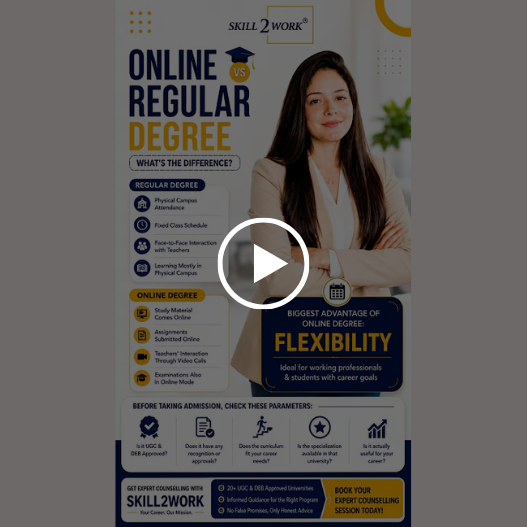
Before taking admission to an Online MA program, it is important to verify the following approvals and accreditations:
An Online MA in Journalism and Mass Communication is well-suited for individuals who have a strong interest in media, communication, and storytelling. It is ideal for graduates looking to specialize in journalism, digital media, public relations, or broadcasting. Working professionals who wish to upgrade their skills while continuing their jobs will also benefit from the flexibility this program offers. Those seeking an affordable, flexible, and globally recognized degree without attending a physical campus will find this program highly beneficial.
After completing an Online MA in Journalism and Mass Communication, graduates can explore various career options in media and communication fields. Opportunities include working as a journalist, content writer, or editor across digital, print, and broadcast platforms. Other career paths include roles such as public relations professional, social media manager, media planner, or communications consultant. Graduates may also pursue leadership roles in media organizations, PR agencies, or newsrooms, or move into academic roles such as teaching media studies. Careers in digital marketing, content strategy, and corporate communications are also accessible.
Yes, an Online MA in Journalism and Mass Communication is a strong career option for those aiming to build or advance a career in the media industry. The program offers flexibility, enabling students to manage work and studies simultaneously while gaining in-depth knowledge of journalism, digital media, and public relations. With increasing demand for skilled media professionals across traditional and digital platforms, this degree provides promising career opportunities and access to leadership roles in a fast-evolving industry.

Graduates of an Online MA in Journalism and Mass Communication can pursue diverse roles in media and communication sectors. Career options include journalist (print, digital, or broadcast), content writer or editor, public relations executive, social media manager, media planner, and communications strategist. Opportunities also exist in corporate communication, media research, content development, and public policy analysis. With the rise of digital platforms, roles in digital journalism, multimedia content creation, and digital marketing are in high demand.
The standard duration of the program is 2 years. However, students are given flexibility to complete the course within a maximum period of 4 years.
Online MA programs may include live lectures conducted through video conferencing or webinars, depending on the course structure. Some programs offer interactive live sessions with faculty, while others follow a self-paced learning model using recorded lectures. Students are advised to review the course details to confirm whether live classes are included.